Thermal and material entanglements of computational power
Research, writings, talks, and organizing/pedagogy tracing the graphics processing unit across its lifecycle — from liquid-nitrogen overclockers in Taipei to urban miners in Agbogbloshie, Ghana.
Struggles and Resilience in GPU Miniaturization: From Taipei's Overclockers to Accra's Urban Miners
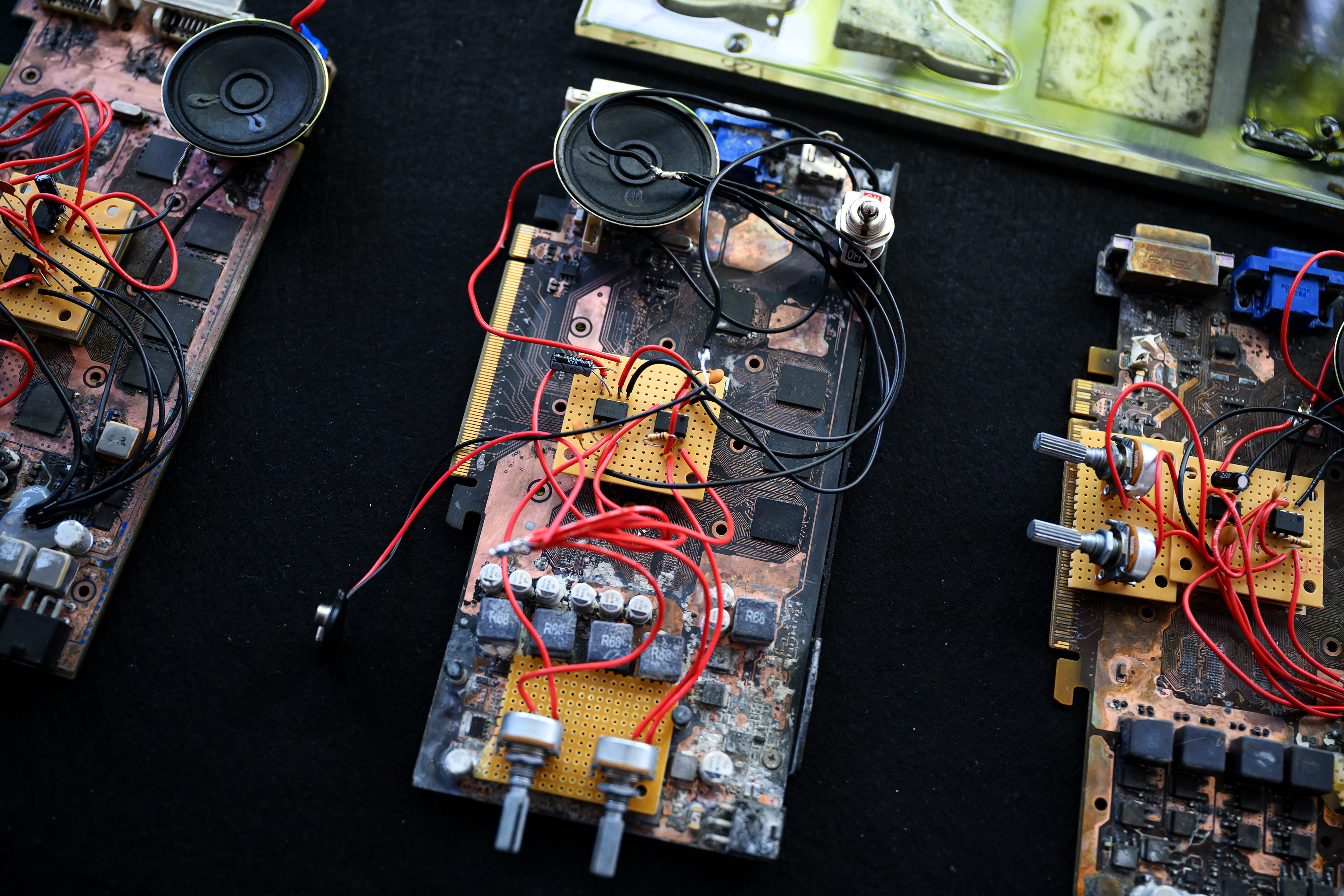
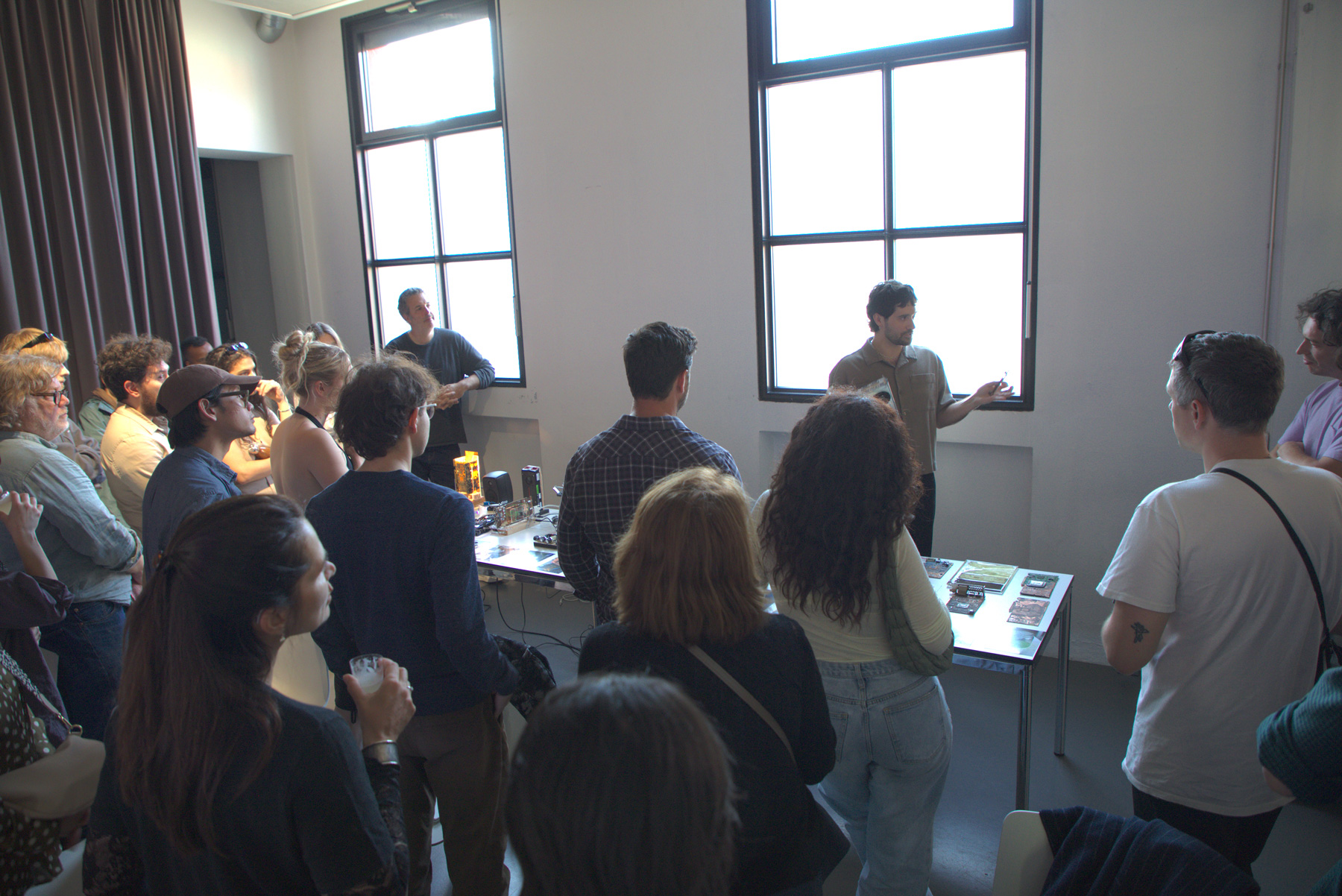
Our algorithmic media landscape is driven by the miniaturization of smartness, a process centered on embedding artificial intelligence into increasingly compact and efficient devices. At the core of this transformation lies the graphical processing unit (GPU), a hardware originally designed for graphics acceleration but now integral to AI and computational parallelization. My PhD examines the political economy of GPU miniaturization by bridging two communities situated at opposite ends of its lifecycle: liquid-nitrogen overclockers in Taipei, Taiwan, who push computational limits through extreme cooling practices, and urban miners in Agbogbloshie, Ghana, who recycle and repurpose discarded GPUs. By tracing their material, environmental, and knowledge infrastructures, my PhD challenges dominant narratives of AI immateriality and universality, revealing smartness as deeply embedded in geological, thermal, and cultural processes. As a research-through-design PhD, it also addresses these elemental practices of labour by combining academic research and fieldwork with hands-on critical and speculative design projects. Disentangling smartness and its miniaturization through situated practices and embodiments placed in dialogue with qualitative data and analysis, the research fosters alternative modes of inquiry. By doing so, it invites us to speculate in more open-ended ways about the past, present and near-future of computing power and its entanglements.
Into The E-Metropolis: Residency
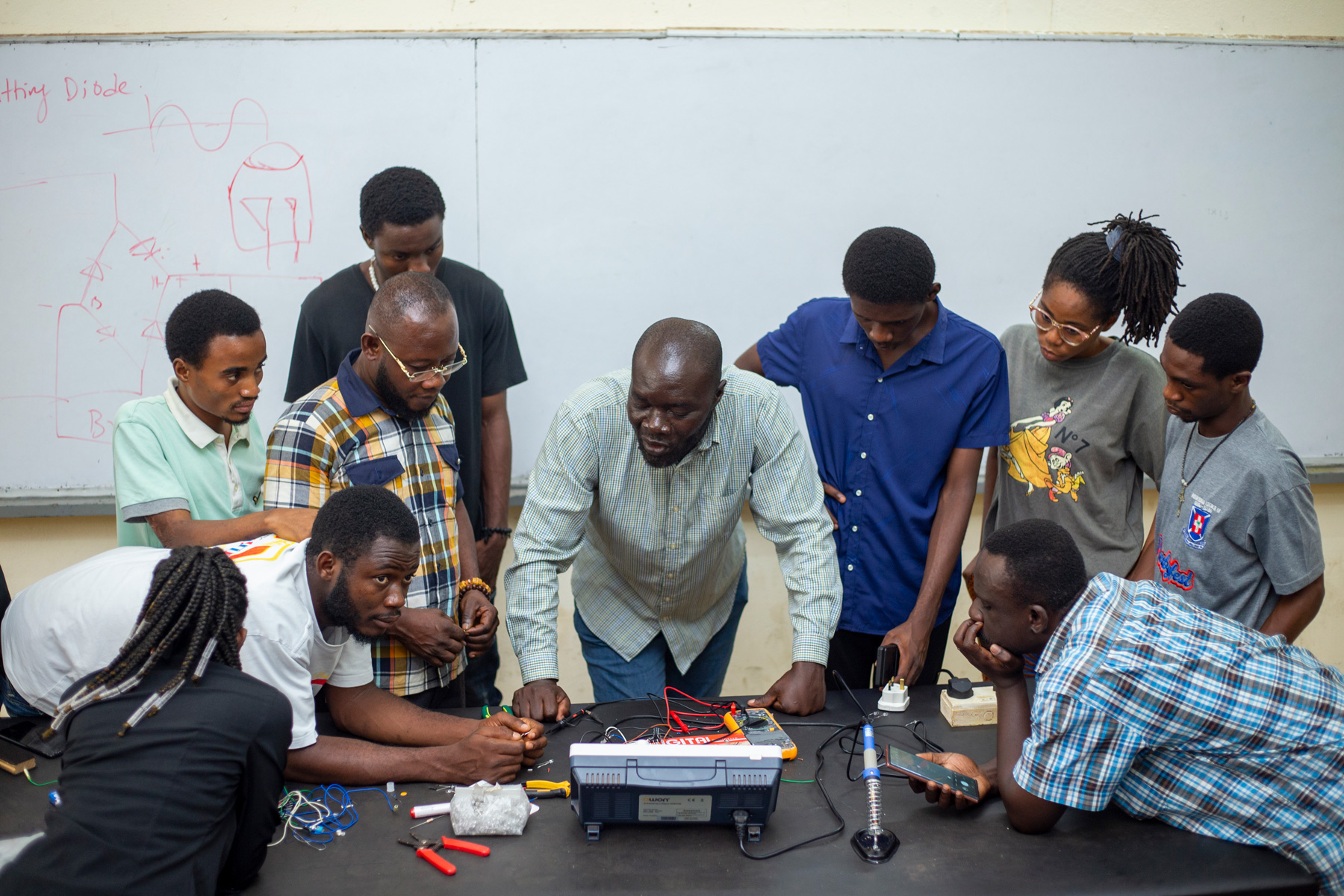
Into the E-Metropolis is a workshop-based initiative focused on reshaping the narrative of Ghana's relationship with electronic waste, particularly at TANTRI, Cape Coast. Rather than subscribing to the simplistic notion of technology being discarded in Ghana's "computer graveyards," the project seeks to illuminate the complex ecosystem of second-hand computer dealers, repairers, scrap-dealers, and metal casters. Operating through the lens of Afrofuturism, it will spark meaningful discussions and workshops involving these workers in order to collectively explore the past, present, and future of their knowledge and practices.
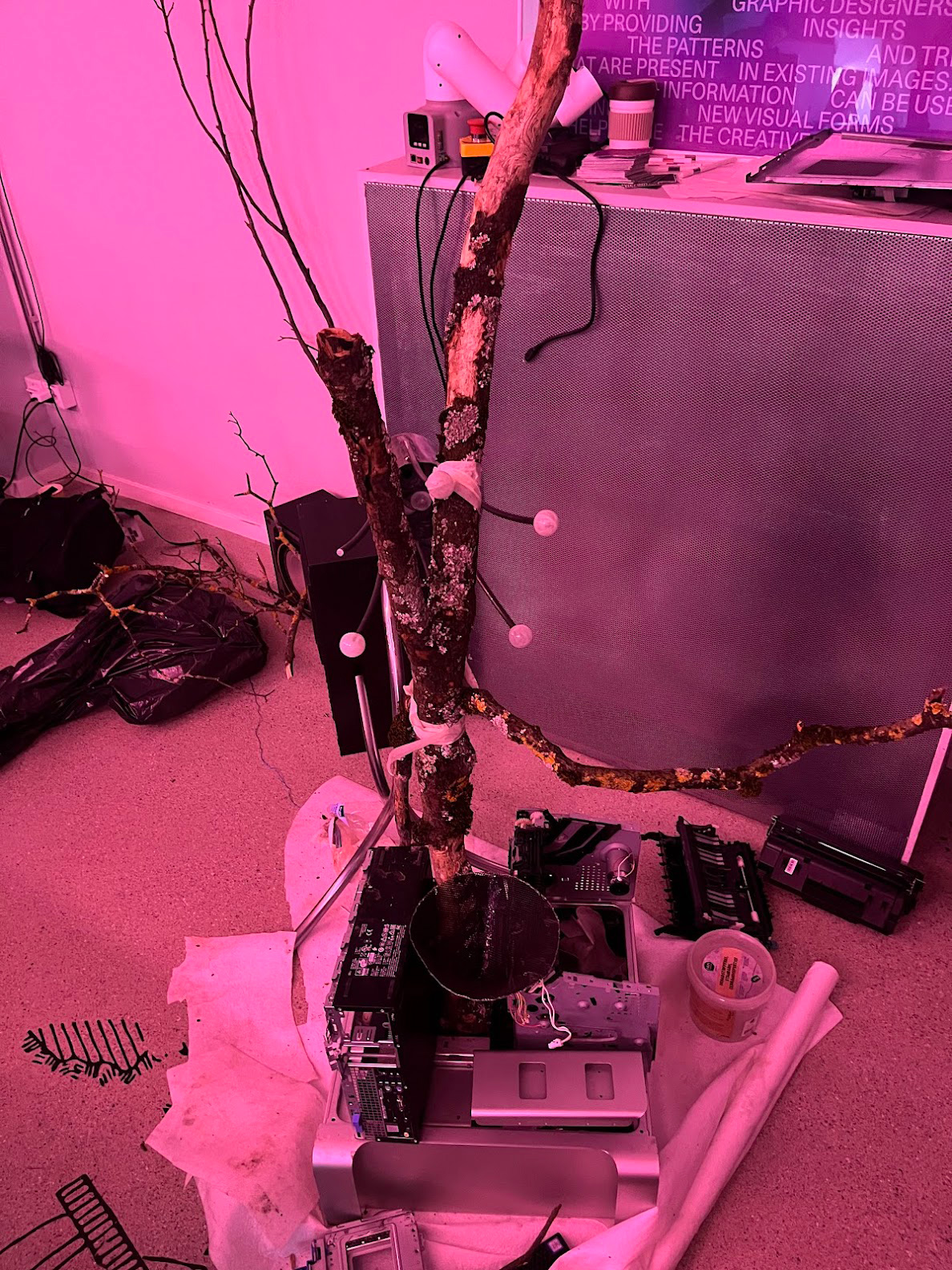
E-waste e-waste TRONs: building low-tech videogames and controllers
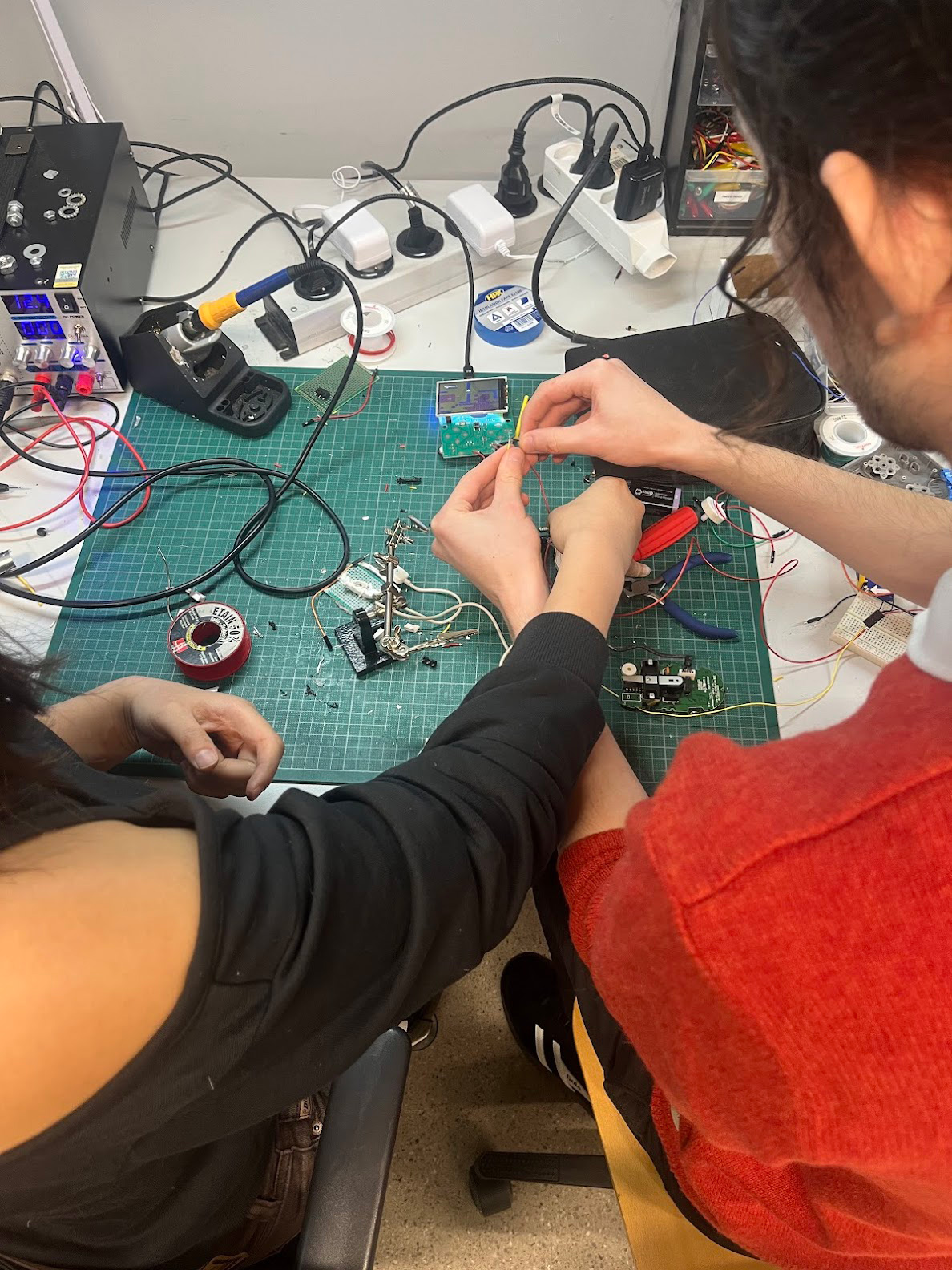
What is at stake when we play "Candy Crush," "Minecraft" or "The Sims"? What are the physical and environmental components behind these seamless interfaces and aesthetics of our gaming culture? How can we create alternative technologies and interactions that question what we cannot directly perceive yet powers our play? In this workshop, we will create low-tech alternative gaming consoles or controllers from a variety of elements: either natural – wood, soil, water, and so on –, or material – electronic waste and other discarded devices found in flea-markets or the streets of Geneva. Participants will thereby engage in processes of recycling, technological subversion, and hacking. They will learn how to crack open these ubiquitous devices of our computational and gaming culture and reuse old technologies for alternative aesthetics of play.
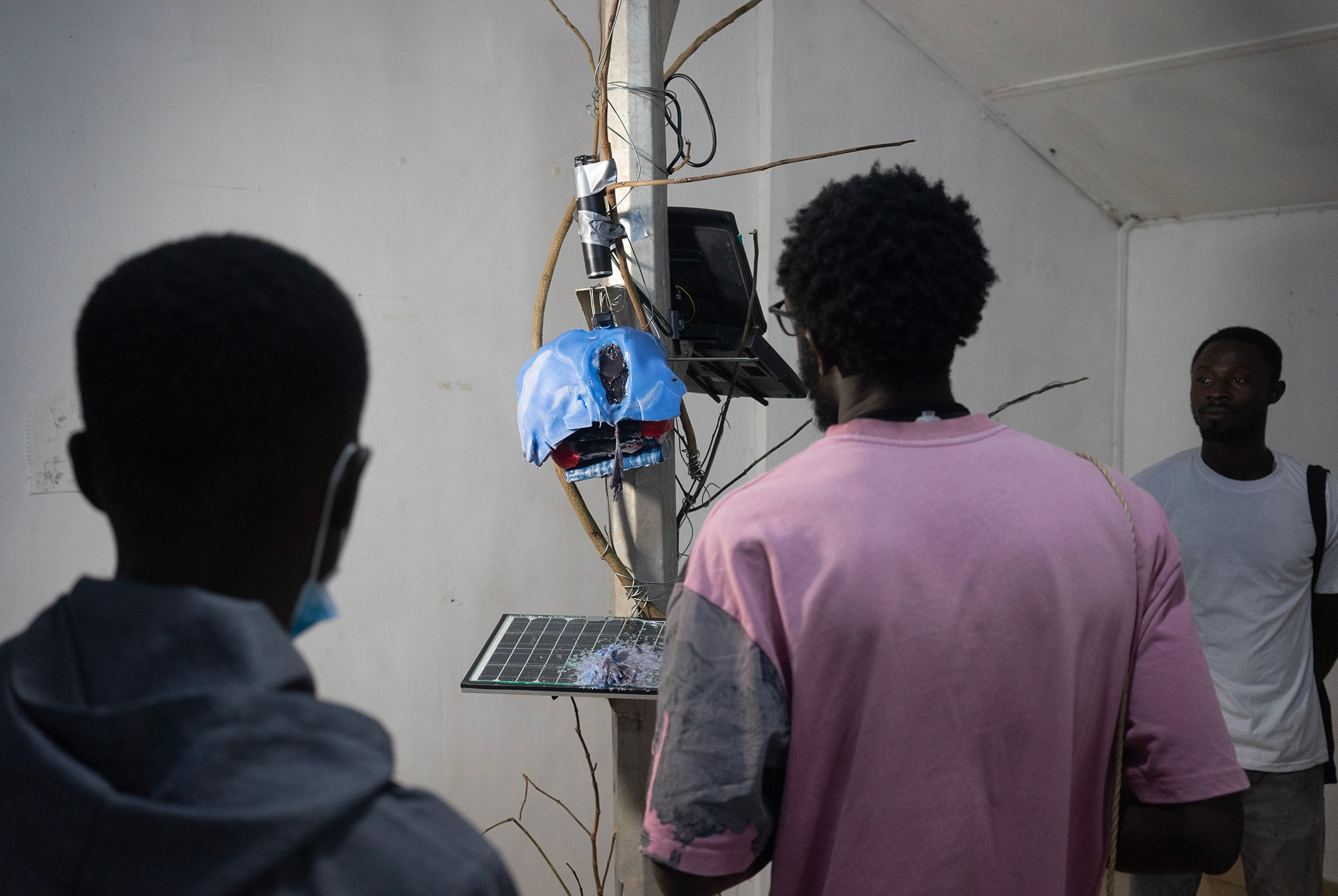
Into The E-Metropolis: Summer school
Digital Pool (Pool Numérique) at HEAD – Genève is pleased to invite you to apply for the Into The E-Metropolis: Summer School, organized in collaboration with the Kwame Nkrumah University of Science and Technology (KNUST) in Ghana. This two-week summer school, conducted in Kumasi, Ghana, aims to connect students from both schools through reshaping the narrative of Ghana's relationship with electronic waste. Instead of reinforcing the simplistic view of Ghana as a mere "electronic graveyard", the workshop will explore the circular economy of second-hand computer dealers, repairers, scrap dealers, and metal casters. By combining workshop visits with the collaborative creation of sculptures and installations using discarded electronics found on site, the summer school aims to raise awareness—through art and design—of the crucial yet often overlooked work of e-waste workers within a broader environmental context.

Stabilising Cooling, Privatising Knowledge
Each year, Taipei's Nangang Exhibition Center becomes the heart of the global computing industry during COMPUTEX, a major trade show where leading tech giants – Nvidia, Intel, TSMC, ASUS, MSI, and G.SKILL – unveil their latest innovations. Spanning developments in AI, gaming, and cooling technologies, COMPUTEX highlights the relentless pursuit of computing power, enabled by semiconductors. Among the show's most anticipated events is liquid-nitrogen overclocking – a niche yet competitive subculture where extreme gamers push CPUs and GPUs beyond their limits, using cryogenic cooling techniques to extract maximum power. Sponsored by hardware manufacturers, these overclockers compete by manipulating temperature-sensitive circuits while navigating the risks of condensation, hardware failure, and the ever-evolving constraints of semiconductor technologies. Beyond the hype and superficial spectacle of COMPUTEX, it serves as a microcosm of broader industrial trends: the commodification of computational thermal control, the corporate influence on hacker culture, and the gradual shift towards closed-source hardware design. What begins as a ritual of extreme cooling ultimately reveals the intricate power and labour at play in shaping the future of computing and our computational culture.
Dismantle and Dissolve, (Re)build, Remix
This contribution follows a four-year investigation (2022–2026) into the political economy of graphics card miniaturization. It begins from the premise that rethinking our relationship to artificial intelligence and its sociotechnical entanglements requires demystifying and opening the black box of this technical object. Within our algorithmic culture, the graphics card (GPU) enables the massive, parallel processing of large datasets, making possible the training of the models that underpin our intelligent systems. GPU miniaturization is equally crucial: as a key driver of the Internet of Things, this sociotechnical phenomenon enables the inclusion of these cards in increasingly compact and powerful systems while also enabling better management of energy resources. The development of these everyday objects and technologies nevertheless reinforces several major problems. Drawing on both the social sciences and the critical, reflexive, speculative, and fictional methodologies of research-creation, the author developed several investigative fieldwork sites—among liquid nitrogen overclockers in Taiwan and urban miners in Ghana—and conducted situated experimentations on some fifty acquired graphics cards. Structured around three themes (dismantle and dissolve, rebuild, remix), this paper demonstrates how research-creation methods constitute full epistemologies for apprehending what seems a priori external, opaque, or inaccessible, and for restoring artificial intelligence to its tangible materialities. In doing so, it contributes to the field of ICT for sustainability by affirming research-creation as a rigorous means of disentangling the material and environmental infrastructures that computational systems both depend on and obscure.
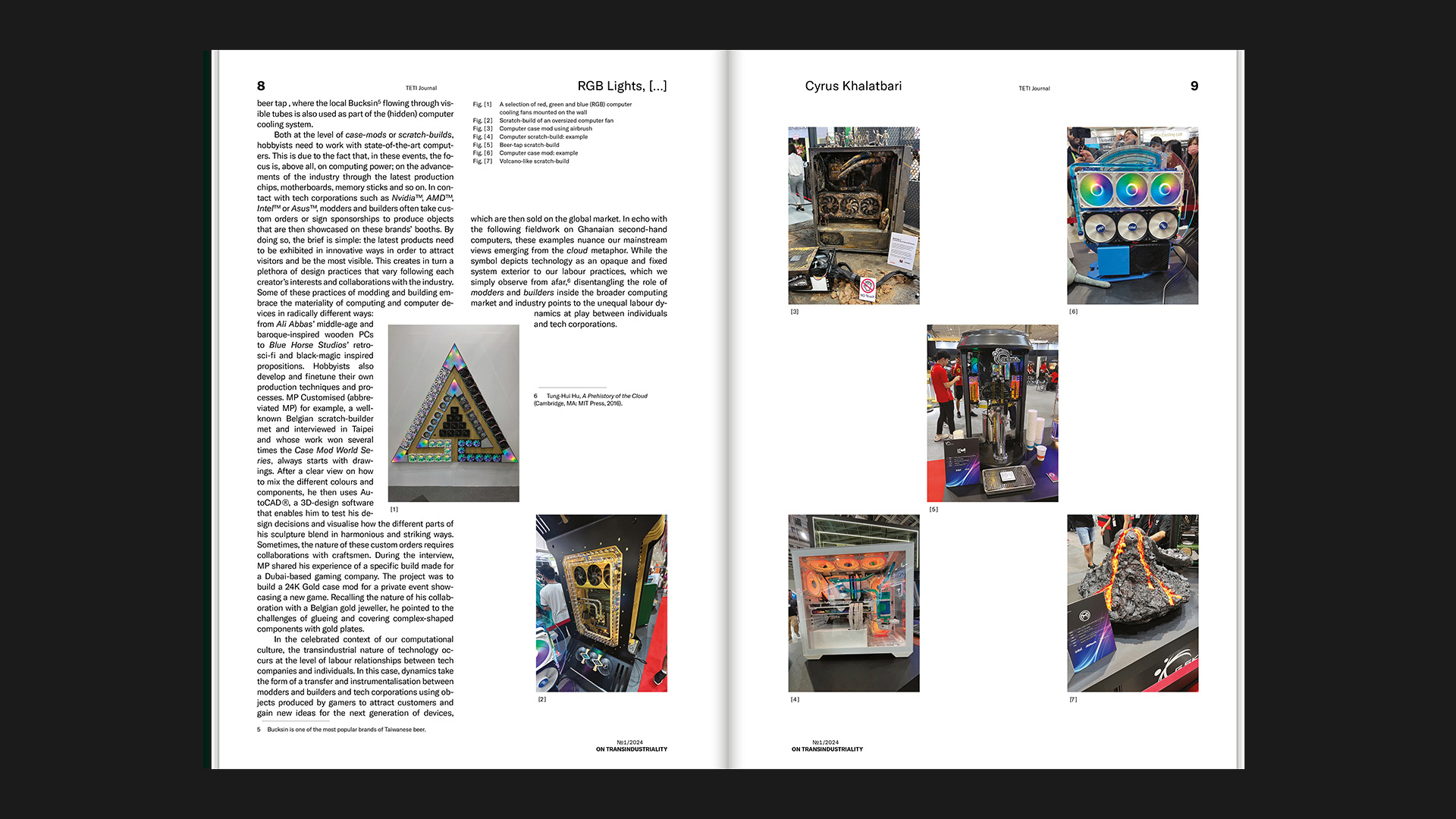
teti
Our algorithmic media landscape is driven by the miniaturisation of smartness, a process centred on embedding computational power into increasingly compact and efficient devices. At the core of this transformation lies the Graphics Processing Unit (GPU), a hardware originally designed for video games and graphics acceleration but now integral to AI and computational parallelisation. This article examines the materiality of GPUs and their miniaturisation process by connecting two communities at the opposite ends of the devices' lifecycle. On one end are liquid-nitrogen overclockers in Taipei, Taiwan, who push computational limits through extreme cooling practices; on the other are urban miners in Agbogbloshie, Ghana, who recycle and repurpose discarded GPUs. By uncovering the material, environmental, and knowledge infrastructure of GPUs, this study reveals smartness as rooted in geological, thermal and sociotechnological entanglements, in contrast to the dominant narratives of AI around immateriality, universality and neutrality. Through three analytical sections – Process and Circulation, Embodied knowledge, and Prototypes – this article uncovers how miniaturisation shapes and is shaped by labour, a desire for optimisation, and stratified economic relations. It ultimately argues that the drive for computational efficiency is inseparable from exploitative dynamics, reinforcing vertical hierarchies between tech corporations and local communities.
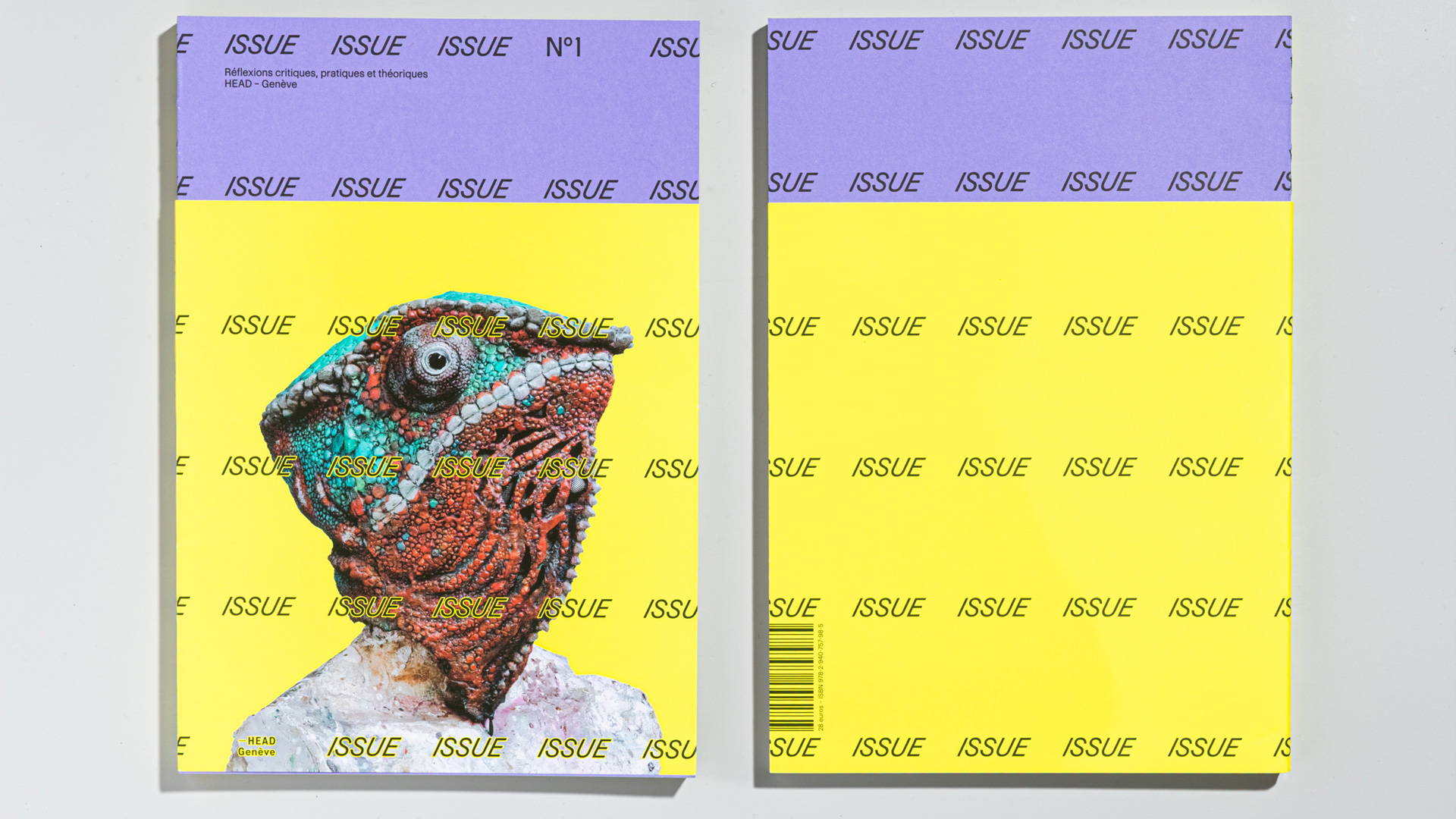
From Cloud Aesthetics to Alternative Circuits and Assemblages
From the seminal "cloud" metaphor to green buttons and blue thumbs-up emojis, our interactions and dominant discourses around the digital embody a specific capitalistic agenda: the one of technology as a commodity fetishism we simply consume and later trash without understanding how it operates. In addition, these interfaces and metaphors hide the complex human, material and environmental assemblages enabling, operating and optimising our digital processes. Drawing from this context, the article is intended for artists and interaction designers interested to critically engage with technology and their "blackboxes". It argues for the importance of bridging design with social sciences and ethnographic fieldwork. Through this lens, it posits that designers can, first, better understand the lifecycle and infrastructures of our electronic objects as well as, second, create artefacts that nuance and critique these dominant narratives and beliefs around digital "immateriality".
Extractivism, gendered-computing and online queer spaces
This contribution sheds light on discarded electronics repair in Accra, Ghana. After placing these practices in dialogue with the Western and Eurocentric narratives around the materiality of digital interactions and infrastructure, it delves into two arts and design contexts that gravitate around the electronic waste landfill and processing site of Agbogbloshie (Ghana). The first case study is the Agbogbloshie Makerspace (AMP), a critical making (and unmaking) platform empowering local repairers and dismantlers through open-source collaborative design methods. The contribution then focuses on the work of Akwasi Bediako Afrane, a Ghanaian media artist who re-appropriates discarded computers to critique and speculate on our sociotechnical condition. Situating these initiatives in the light of our broader dominant internet and computing narratives, the article situates the importance of these practices in order to tackle and raise awareness about the planetary electronic waste condition we live in.
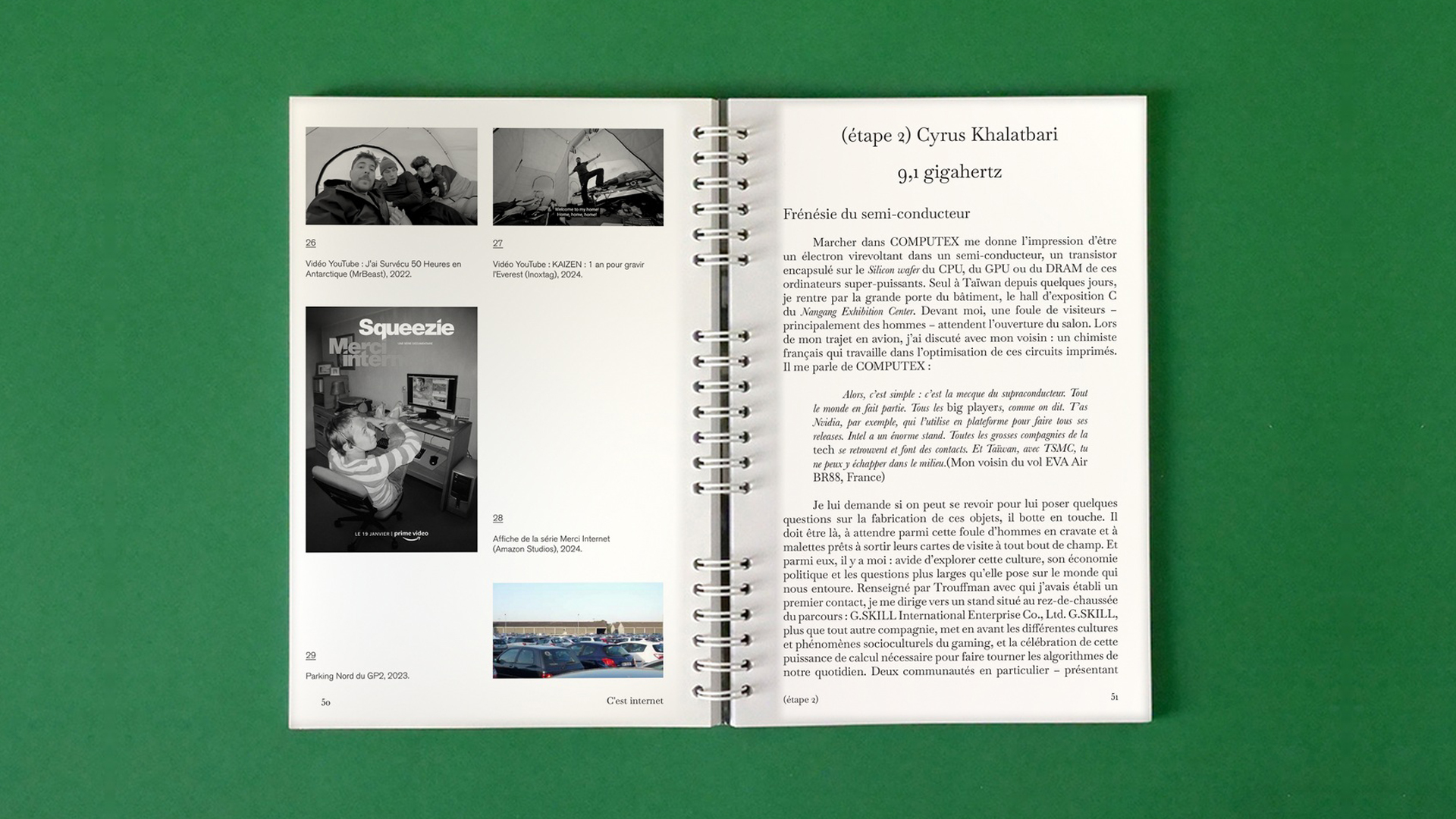
9,1 gigahertz
From the seminal "cloud" metaphor to green buttons and blue thumbs-up emojis, our interactions and dominant discourses around the digital embody a specific capitalistic agenda: the one of technology as a commodity fetishism we simply consume and later trash without understanding how it operates. In addition, these interfaces and metaphors hide the complex human, material and environmental assemblages enabling, operating and optimising our digital processes. Drawing from this context, the article is intended for artists and interaction designers interested to critically engage with technology and their "blackboxes". It argues for the importance of bridging design with social sciences and ethnographic fieldwork. Through this lens, it posits that designers can, first, better understand the lifecycle and infrastructures of our electronic objects as well as, second, create artefacts that nuance and critique these dominant narratives and beliefs around digital "immateriality".
Assembling Intelligence
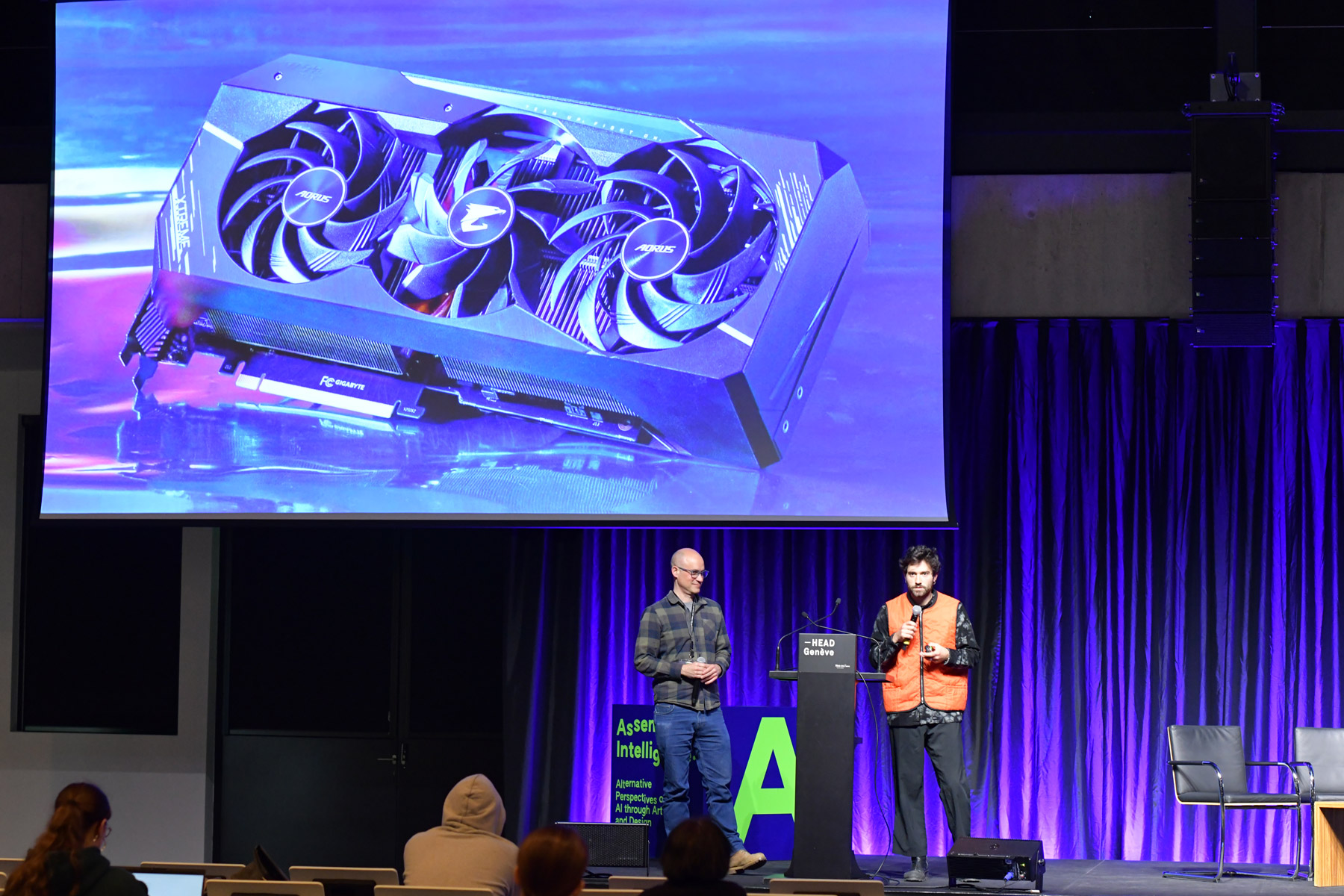
Assembling Intelligence, a multidisciplinary symposium organised by HEAD – Genève (HES-SO), will bring together artists, designers, and researchers to highlight a spectrum of alternative definitions for 'artificial intelligence'. The discussions will introduce much-needed diversity into the otherwise monochromatic and frequently cynical perspectives manifested in mainstream corporate AI models. A series of talks, workshops, and performances will bring attention to overlooked intellectual histories of AI, explore intersections between popular culture and human-machine intimacy, look at open software as means for creative emancipation, and highlight diverse futures for our damaged planet by extrapolating from the material and environmental underpinnings of AI infrastructures.
Schizoïdes intervalles
De l'intelligence artificielle (IA) aux crypto-monnaies et aux environnements 3D, la puissance de calcul est régulièrement représentée par les acteur.ice.s et corporations privées d'internet comme insaisissable et déconnectée de son infrastructure humaine et matérielle. En réfléchissant de manière critique à cette croyance sociotechnique, cette journée d'étude a pour but de nourrir une collaboration entre plusieurs artistes et chercheur.ses suisse et français afin de démystifier collectivement et d'éclairer les pratiques environnementales et humaines gravitant autour de nos cultures numériques. À travers des interventions de chercheur.euse.es, une série de conférences performée et de performances artistiques, cette journée d'étude ouverte au public vise à mettre en lumière les implications humaines et matérielles de la puissance informatique nécessaire pour faire fonctionner nos plateformes Internet et leurs objets numériques. En opposition aux discours privés de l'Internet utilisant la métaphore du cloud pour nous distancier des impacts sociaux et écologiques de nos comportements et actions en ligne, le symposium se concentrera également sur deux cadres de recherche placés en dialogue et rendus visibles.
Open Hardware Symposium x CUCCR
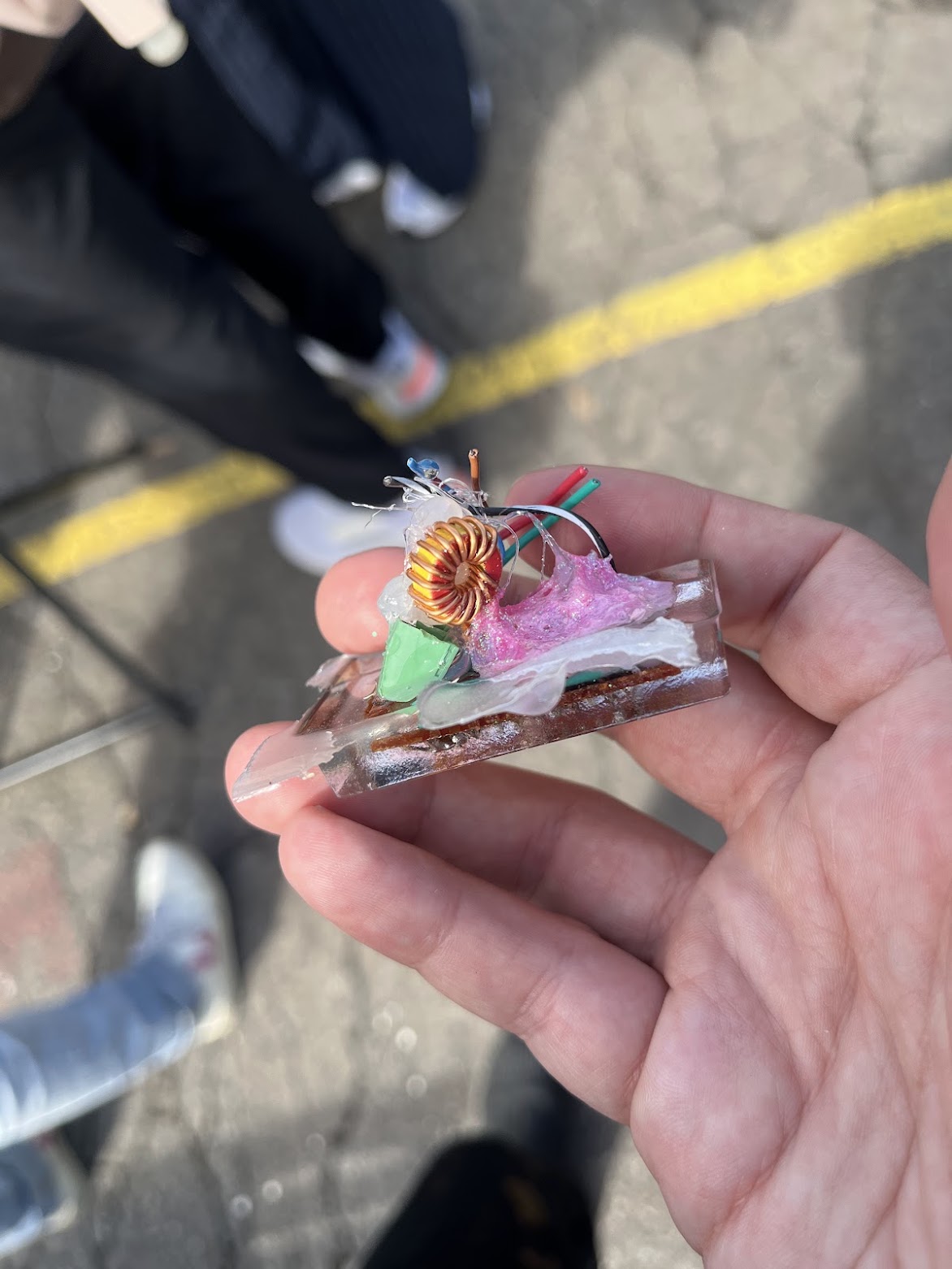
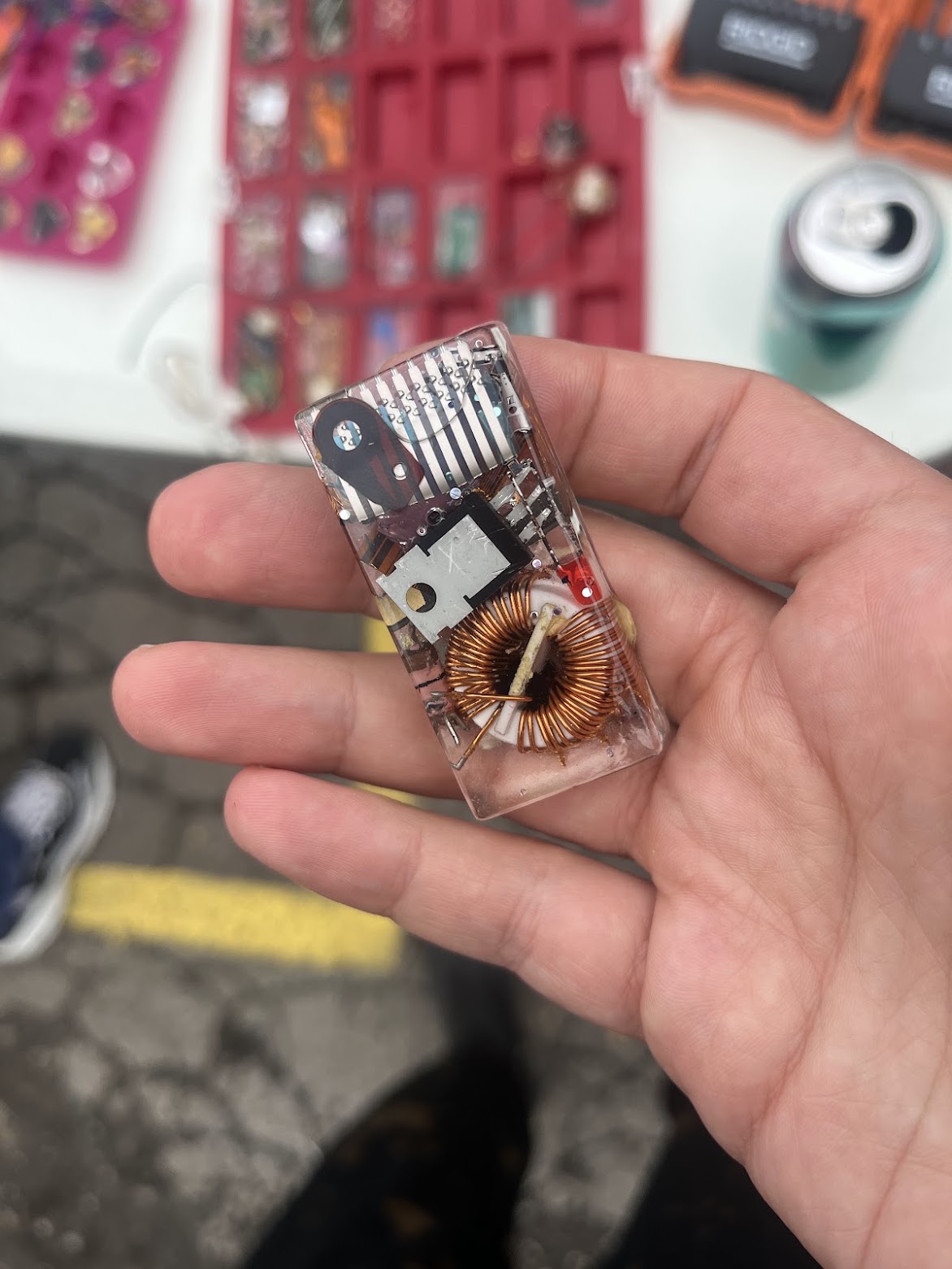
What can we do with our old radios, computers, or gadgets? In this workshop, we will ask participants to bring their own discarded electronics. We will open them, isolate some of their components and collectively cast these in clear epoxy resin to preserve and turn them into ornamental objects; whether keychains, necklaces or others. This workshop is intended to be fun and playful, resulting in the creation of objects participants will bring with them. We will bring paint to colour these objects, glitter to mix with the epoxy, beads for creating bracelets, casting moulds of several sizes and a fast-casting resin. Finally, with these discarded electronics, our workshop will also serve as a platform to collectively discuss and engage with the topic of electronic waste; inviting participants to share, in an organic, open-ended and inclusive way, stories, anecdotes and thoughts about the (after)life of these objects.